
Team
AIM-Net is a national research network that unites leading Spanish groups working at the intersection of microscopy, quantitative biology, and artificial intelligence. Its mission is to integrate imaging data across molecular, cellular, and tissue scales to achieve a comprehensive understanding of biological organization and dynamics.
AIM-Net promotes collaboration among physicists, biologists, microscopists, and computer scientists to develop AI-based strategies for data integration, interpretation, and modeling. The network also fosters training, open science, and outreach activities to strengthen the Spanish research community in AI-driven bioimaging and to project its leadership internationally.
— Meet the minds behind our network
Executive Committee
The Executive Committee provides scientific leadership, monitors the progress of the network’s activities, and defines its strategic directions.
- María García-Parajo (ICFO) — Coordinator
- Carlos Ortiz de Solórzano (CIMA-UNAV)
- Luis M. Escudero (University of Seville)
- Carlo Manzo (UVic-UCC)
- Diego Megías (ISCIII)
Data Integration and Analysis
Responsible for ensuring coherent integration and analysis of multiscale imaging data using advanced computational and AI-based approaches.
- Carlos Ortiz de Solórzano (CIMA-UNAV)
- Arrate Muñoz Barrutia (UC3M)
- Jónathan Heras (University of La Rioja)
Network Performance and Strategic Plan
Oversees the monitoring of AIM-Net’s activities, evaluates its impact, and plans long-term strategic actions, including major scientific events.
- Diego Megías (ISCIII)
- Carlo Manzo (UVic-UCC)
- Oriol Gallego (UPF)
Training and Outreach
Coordinates the network’s educational and outreach activities, such as the biennial Summer School, workshops, and public engagement initiatives.
- Luis M. Escudero (University of Seville)
- Isabel Peset Martín (CNIO)
- Pedro Gómez (University of Seville)
- Oriol Gallego (UPF)
- Jónathan Heras (University of La Rioja)
Communications and Events
Manages AIM-Net’s internal and external communications, maintains the network’s website and social media presence, and organizes scientific meetings and dissemination events.
- María García-Parajo (ICFO)
- Victoria Neguembor (IBMB)
- Oriol Gallego (UPF)
- José Requejo (CSIC)
Core members
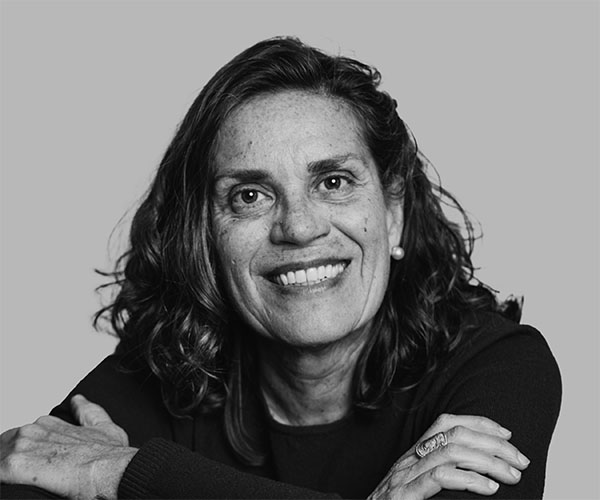
Maria Garcia-Parajo
Institute of Photonic Sciences (ICFO)
Barcelona, Spain
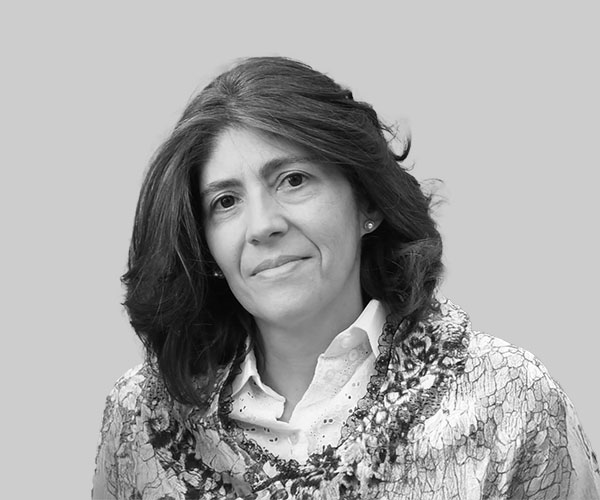
University of Castilla-La Mancha (UCLM)
Ciudad Real, Spain
- AI-assisted microscopy and computational imaging (enhancement, fusion, quality, deployment).
- Multiscale bioimage analysis from microorganisms and cells to tissue/whole-slide pathology.
- Data-efficient learning for limited/variable microscopy data (few-shot, semi-supervised, multimodal).
- Graph-based learning for tissue microenvironment and structure-aware pathology.
- Trustworthy AI for imaging: robustness, generalization, and adversarial detection.
- 2D/3D segmentation, instance segmentation, and detection transformers for microscopy tasks.
- CNNs, transformers, and multimodal fusion; few-shot/prototypical learning for taxonomy-like problems.
- Graph neural networks for structured tissue units and decision support.
- Reproducible tooling and practical pipelines (QuPath/ImageJ extensions; low-cost/edge microscopy systems).
- Robustness evaluation and adversarial example detection using chaos-based and activation-map methods.
Oscar Deniz — Co. Principal Investigator.
Maria Viñas — Tenured CSIC scientist.
Luis M. Escudero
University of Seville. Institute of Biomedicine of Seville (IBiS)
Seville, Spain
- Segmentation of 3D/4D epithelial images based on U-Net like training.
- Synthetic datasets generation for subsequent packed tissue segmentation using 3D cycleGANs.
- NDICIA (Neuromuscular DIsease Computerised Image Analysis) to quantify severity of the mutant condition and detect the most relevant features compared with a control group.
Pedro Gómez-Gálvez — Co-PI. PostDoc researcher specialized in computational biology (image processing, machine/deep-learning methods, math and biophysical modeling), cell biology and neuroscience.
Jesús Ángel Andrés-San Román — PhD student with expertise in physics, cell biology and deep-learning based methodology applied to image analysis.

Carlo Manzo
Universitat de Vic (UVIC)
Vic, Spain
Juan Bertran
Marta Cullell
Sergi Masó
Montse Masoliver
Diego Megias Vazquez
Instituto de Salud Carlos III (ISCIII)
Spain
Juliana Manosalva — Microscopist Degree in Biology.
Dr. Joaquim Torra — Senior research fellow with expertise in photochemistry, photobiology, and fluorescence imaging.
Ignacio Arganda-Carreras
University of the Basque Country (UPV/EHU)
San Sebastián, Spain
- Deep learning and computer vision for microscopy image analysis.
- Multiscale image integration across molecular, cellular, and tissue levels.
- Self-supervised, few-shot, and interpretable learning frameworks for bioimages.
- Quantitative modeling of biological processes from imaging data.
- 2D, 3D, and 4D image segmentation and instance detection.
- Domain adaptation and generalization for microscopy datasets.
- Foundation models and self-supervised learning in bioimaging.
- Development of reproducible open-source pipelines.
Fadi Dornaika — Co-Principal Investigator.
Nagore Barrena — Associate Professor.
• Unai Elordi — Associate Professor.
Oriol Gallego
Universitat Pompeu Fabra (UPF)
Barcelona, Spain
- Development of quantitative microscopy for structural biology (e.g. PICT, automatized pipelines for SPT analysis)
- Integrative structural biology: Modelling molecular interactions in 3D by using quantitative live-cell imaging measurements as constraints.
- Structural cell biology: We investigate cell mechanisms in situ by integrating SLML, SPT and cryo-CLEM
Sébastien Tosi — Staff scientist. Senior bioimage analyst.
Xavier Sanjua — Technical support, Maintenance of microscope systems.
Jonathan Heras
Universidad de la Rioja (ULR)
Logroño, Spain
- Deep learning methods for computer vision in biomedicine
- Image processing in biomedicine
• Gadea Mata Martínez. Lecturer — Expert in biomedical image processing.
Maria Pia Cosma
Centre for Genomic Regulation (CRG)
Barcelona, Spain
Jose Requejo Isidro
Centro Nacional de Biotecnologia (CNB-CSIC)
Madrid, Spain
Carlos Ortiz de Solórzano
Laboratory of Microphysiological Systems and Quantitative Biology
Centro de Investigación Médica Aplicada, Universidad de Navarra (CIMA-UNAV)
Pamplona, Spain
- Development of quantitative image analysis algorithms for to the detection and study of the genetics and etiology of cancer.
- Implementation of cell segmentation and tracking algorithms for the study of the mechanobiology of cell migration.
- Development of novel image filtering, registration and segmentation methods.
- Non-invasive imaging of the disease in both humans and pre-clinical models.
- Development of combined microscopy and microfluidic-based solutions for cell and organ-on-a-chip assays.
- Development of liquid biopsy systems based on microfluidic systems.
- AI based Cell Segmentation and Tracking.
- Computational Pathology tools for Multispectral Immunostained Samples.
- Tools for Spatial Transcriptomic Analysis.
Armando del Río Hernández
Cellular and Molecular Biomechanics Laboratory
Universidad Carlos III de Madrid (UC3M)
Getafe, Spain
The research group led by Armando del Rio at UC3M focuses on the biomechanical and biophysical regulation of cells and tissues in health and disease. The lab works to understand how mechanical forces, physical constraints, and microenvironmental cues shape cellular behavior, tissue organization, and pathological progression. By integrating approaches from cell biology, physics, engineering, and quantitative imaging, the group seeks to uncover fundamental mechanisms by which cells sense, generate, and respond to mechanical stimuli.
A central theme of the group’s work is understanding how mechanical regulation influences processes such as morphogenesis, tissue homeostasis, and disease development, including cancer. The lab develops and applies advanced experimental platforms (combining microfabrication, live-cell imaging, and computational modeling) to measure forces and mechanical properties across scales, from single cells to multicellular systems.
Through this interdisciplinary strategy, the group aims to bridge molecular mechanisms with tissue-level dynamics, contributing to a predictive understanding of how mechanical regulation controls complex biological systems. Their research provides insights with potential implications for regenerative medicine, cancer biology, and mechanobiology-driven therapeutic strategies.
- Multiscale mechanobiology and mechanotransduction: Investigating how mechanical forces regulate protein conformation, cytoskeletal organization, and cell signalling. Using quantitative microscopy and bioengineering tools, this line aligns with AIM-Net’s multiscale framework linking physical cues to cellular function.
- Force-sensitive adhesion and integrin signalling: Studying mechanosensitive proteins (e.g., talin/vinculin) and force-dependent signalling pathways controlling cell fate and disease progression through quantitative imaging and molecular perturbation.
- Biomechanics of the tumour microenvironment: Characterising how stromal mechanics and extracellular matrix stiffness regulate breast and pancreatic cancer progression, integrating biomechanical measurements with imaging-based analysis.
- Microfluidic platforms for biomarker discovery: Developing microfluidic systems for isolation and imaging-based analysis of circulating biomarkers, supporting early and minimally invasive cancer detection.
- Confocal and advanced microscopy for high-resolution imaging of cellular and molecular mechanobiology.
- Elastic pillar arrays to quantify cellular traction forces and substrate mechanics.
- Protein expression and purification enabling mechanistic and structural studies of mechanosensitive proteins.
- Tissue culture systems for controlled mechanobiological experiments in cells relevant to cancer and stromal biology.
- Atomic Force Microscopy for nanomechanical probing of cells and biomolecules.
- Single-Molecule Force Spectroscopy to investigate force-dependent molecular level.
- Magnetic tweezers for precise application and measurement of forces at the molecular level.
- Microfluidics for mechanical manipulation, biomarker isolation, and integrated bioengineering assays.
Partners
Isabel Peset Martin
Centro Nacional de Investigaciones Oncológicas (CNIO)
Madrid, Spain
Ana Cayuela — Bioimage analyst.
Maria Calvo — Data Scientist and AI.
Manuel Pérez — Image specialist.
Maria Victoria Neguembor
Molecular Biology Institute of Barcelona (IBMB-CSIC)
Barcelona, Spain
ria Helena de Donato Pérez — PhD student.
Alba Sitjes Tomás — PhD student.
Irene Cortés Ferreño — MSc Student.
Arrate Muñoz Barrutia
Computational Imaging for Biomedical Discovery
Universidad Carlos III de Madrid (UC3M)
Getafe, Spain
The Computational Imaging for Biomedical Discovery group and Universidad Carlos III de Madrid (UC3M), led by Prof. Arrate Muñoz Barrutia, develops artificial intelligence and computational modelling frameworks to understand complex diseases through quantitative imaging and multimodal data integration. The group combines bioimage analysis, machine learning, and multiscale modelling to transform heterogeneous biomedical data into reproducible and clinically meaningful insights.
Research spans computational oncology -linking 3D histology, tumour microenvironment organization, and mechanobiology- with neurodegeneration modelling, including prediction of Alzheimer’s disease biomarkers from sleep EEG data. The group is strongly committed to open science and sustainable AI, leading developments such as deepImageJ and contributing to the BioImage Model Zoo within the European AI4Life infrastructure.
Through international collaborations and leadership in benchmarking initiatives (e.g., Cell Tracking Challenge), the group promotes robust, FAIR, and deployable AI technologies that bridge methodological innovation and real biomedical applications.
- AI-driven quantitative bioimaging for robust, reproducible extraction of information from complex biomedical imaging data, including foundation models, benchmarking, and sustainable AI practices.
- Computational oncology and tumor microenvironment modelling, integrating 3D histology, spatial analysis, and mechanobiology to derive computational biomarkers for precision medicine.
- Multiscale modelling and FAIR data infrastructures, connecting molecular to organ-level information through open, interoperable platforms aligned with European research infrastructures.
- AI-based bioimage analysis (segmentation, tracking, restoration, domain adaptation, foundation models).
- 3D histological reconstruction and spatial tissue modelling for tumour microenvironment characterization.
- Multimodal data integration frameworks (imaging, EEG, molecular biomarkers).
- Quantitative mechanobiology image analysis linking physical cues with cellular phenotypes.
- Benchmarking and validation methodologies (challenge organization, objective performance assessment).
- FAIR and interoperable AI deployment tools (deepImageJ, BioImage Model Zoo integration).